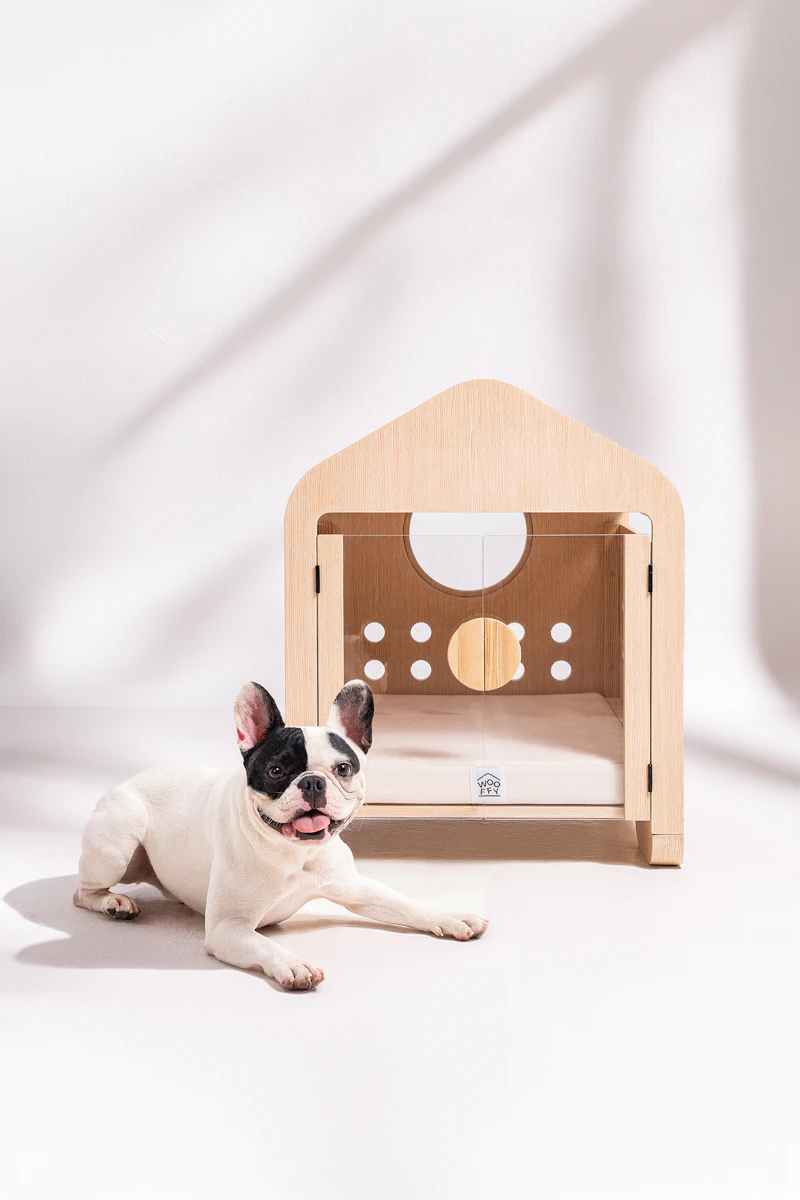
Choosing the right crate size is one of the most crucial decisions for your dog’s comfort, safety, and well-being. Use this dog crate size guide to learn how to select a crate that strikes the right balance between space and security. To pick the ideal crate for your dog, it’s important to measure your dog properly, understand crate sizing standards, and factor in your dog’s unique needs and habits.
Why Dog Crate Size Matters
A too-small crate can be uncomfortable and restrictive for your dog, while one that's too big may encourage unwanted behaviors or compromise safety. The right crate size provides your dog with a cozy den that’s comfortable for resting, effective for training, and suitable for safe travel or home use.
Comfort and Security
- Feeling of safety: A correctly sized crate gives dogs a sense of security, like a den. It can help with anxiety and provide a peaceful retreat.
- Avoids accidents: Proper sizing discourages your dog from using one end as a bathroom, supporting crate training success.
- Supports physical well-being: Crates that are too small or too big can cause discomfort, sore muscles, or encourage unsafe movement inside the crate.
Behavior and Training
- Prevents escape and chewing: A well-fitted crate minimizes the risk of escape attempts and destructive chewing at the edges.
- Promotes positive association: Dogs are more likely to feel relaxed and comfortable when the crate fits them well.
How to Measure Your Dog for a Crate
Getting precise measurements is the foundation of finding the right crate size for your dog. Dogs vary by breed, age, body proportions, and coat length, so don’t rely solely on weight or generic sizing charts. Here’s a practical process to measure your dog for a crate:
- Length: Have your dog stand on all fours. Measure from the tip of the nose to the base of the tail (not including their tail length). Add 2 to 4 inches to this length for comfort.
- Height: Measure from the floor to the highest point of the head or ears (whichever is taller when your dog is sitting). Add 2 to 4 inches for movement and head clearance.
- Width: Most crates are designed proportionally, so you usually don’t need to measure width separately. A crate that matches your dog’s length and height with these guidelines should provide enough width for sleeping and turning around.
Tip: If your dog has an especially long tail, giant breed head, or deep chest, adjust measurements accordingly and look for wider or taller crate models.
Sample Measurement Table
| Dog Size | Length (nose to base of tail) | Height (floor to head/ears) | Suggested Crate Size (interior) |
|---|---|---|---|
| Small | Up to 18" | Up to 15" | 22" L x 16" W x 16" H |
| Medium | 18" – 24" | 16" – 20" | 30" L x 19" W x 21" H |
| Large | 25" – 34" | 21" – 24" | 42" L x 28" W x 31" H |
| Extra Large | 35" +" | 25" +" | 48" L x 30" W x 33" H |
These dimensions are guidelines—always cross-check with the manufacturer’s internal measurements before buying.
Understanding Dog Crate Sizing Standards
Crate manufacturers typically label their products as small, medium, large, extra-large, or even giant, along with exact dimensions given in inches or centimeters. However, size labels can vary significantly between brands, so always check the crate’s inner measurements—don’t go by weight only.
Common Crate Size Labels
- 18”-22” (Small): Toy breeds, puppies, Chihuahuas, Yorkshire Terriers
- 24”-30” (Medium): Shih Tzus, Cocker Spaniels, French Bulldogs
- 36”-42” (Large): Labrador Retrievers, Golden Retrievers, Boxers
- 48” (Extra-Large): German Shepherds, Rottweilers, Great Danes
Always use your measurements alongside these guidelines, as a shorter, stocky dog may fit a smaller crate than a tall, lanky dog of the same weight.
What Size Crate for Dog Breeds (Breed Reference Chart)
While each dog is unique, the following crate sizing chart provides a ballpark idea for some popular breeds. If your dog is mixed breed, use the chart for the breed your dog most closely resembles in build and size.
| Breed | Average Adult Weight | Recommended Crate Size |
|---|---|---|
| Chihuahua | 3-6 lbs | 18"-22" (Small) |
| French Bulldog | 18-28 lbs | 24"-30" (Medium) |
| Cocker Spaniel | 20-30 lbs | 30"-36" (Medium) |
| Labrador Retriever | 55-80 lbs | 36"-42" (Large) |
| German Shepherd | 65-90 lbs | 42"-48" (Extra-Large) |
| Great Dane | 100-170 lbs | 48" +(Giant) |
These are only reference points—always allow your own dog’s measurements to guide the final decision.
Key Questions for Picking the Best Crate Size
- Can your dog stand up, turn around, and lie down comfortably?
- Will your dog use the crate for short rest periods or overnight sleeping?
- Do you have a growing puppy?
- Is your dog lean and leggy, or shorter and barrel-chested?
- Will you use the crate for airline travel (check airline requirements)?
Crate Sizing for Puppies and Growing Dogs
Puppies grow quickly, and buying a new crate every few months isn’t practical. Most owners choose a crate that will fit their dog at adult size, and use crate dividers that come with many wire or plastic models. Crate dividers allow you to block off unused space and expand the area as your puppy grows.
How to use a crate divider:
- Choose a crate sized for your dog’s expected adult dimensions.
- Install the divider to limit the usable crate area to fit your puppy’s current measurements.
- Move the divider as your puppy grows, ensuring the space remains just big enough for comfortable rest, standing, and turning around.
If you’re uncertain how big your puppy will get, consult your veterinarian or research breed growth patterns, but always base your crate decision on real measurements.
Special Considerations for Unusual Breeds or Needs
Some dogs don’t fall into standard categories. Deep-chested or leggy breeds (like Greyhounds or Whippets) might need a crate that’s taller or longer than the average dog of the same weight. Bulky-headed breeds, like Bulldogs or Mastiffs, may need extra width for comfort. Dogs with anxiety may prefer a crate that’s a bit cozier, while those who love to sprawl might enjoy extra space.
- Overweight or arthritic dogs: Opt for a slightly larger crate for easier movement and to accommodate orthopedic beds, but don’t go so big that it becomes den-like.
- Multiple dogs: If crating two dogs together, make sure the crate is large enough for both to stand up and turn around comfortably. Crating is best done separately unless the dogs are bonded and equally sized.
- Travel crates: Airline and vehicle crates often have their own size requirements—always check with your carrier for specific limits.
Which Crate Style Affects Sizing?
Different crate styles may influence your size selection. Common types include:
- Wire crates: Good for home use and ventilation. Collapsible models often include dividers for growing pups.
- Plastic travel crates: Airline-approved, solid-sided, and may run slightly smaller internally than wire crates.
- Soft-sided crates: Lightweight and portable but less secure for dogs who chew or scratch.
- Heavy-duty crates: Built for escape artists or strong breeds. Check inner dimensions carefully, as walls may be thicker.
- Furniture-style crates: Stylish, but interior room can be tight—always measure interior, not exterior, space.
Check the product’s overall outside and inside dimensions before purchasing. Some crates look large but offer less interior room due to thicker walls, rounded corners, or waterproof liners.
Checklist: How to Pick the Right Dog Crate Size
- Measure your dog's length and height accurately while standing and sitting.
- Add 2-4 inches to both length and height for comfort.
- Choose the crate style based on your needs—wire, plastic, fabric, or heavy-duty.
- Match crate’s inside dimensions to your dog’s measurements.
- Consider crate dividers if you have a puppy or a growing dog.
- For travel, double-check airline or vehicle sizing requirements.
- Observe your dog’s posture, sleeping style, and preferences to fine-tune your choice.
Remember, a crate is meant to be a safe, comfortable refuge for your dog. Too much or too little space can quickly undo the benefits of crate training.
Signs Your Dog’s Crate Size Needs Adjusting
After buying a crate, keep an eye on your dog’s behavior and body language. If you notice any of the following, reconsider your size choice:
- Dog is hunched, cramped, or bumping into crate walls
- Dog can’t fully stand or sit upright inside
- Dog soils one area and sleeps in another (crate is too big)
- Dog seems stressed, anxious, or unwilling to use the crate
- Dog appears restless and can’t turn around easily
Make adjustments using crate dividers, bedding, or, if necessary, select a different crate with the right internal measurements.
What to Avoid When Choosing a Crate
- Guessing based on breed or weight only. Actual size varies due to individual differences in build.
- Measuring with the dog lying down. Always measure your dog while standing and sitting for accuracy.
- Relying on external crate dimensions. Interior space is what matters: check the product’s inner measurements.
- Going too big “just in case.” Excess space can hinder training and compromise the dog’s sense of security.
- Ignoring height: Head clearance is just as important as length for larger or upright-eared breeds.
Tips for Making a Crate More Comfortable
The right size crate is the first step, but comfort comes from what’s inside and how you use it:
- Add a fitted crate bed or mat for cushioning.
- Include a favorite blanket or toy to increase positive association.
- Keep water accessible if crating for long periods (use a spill-proof bowl if needed).
- Adjust crate location—avoid placing it in drafty, isolated, or high-traffic spots.
- Keep doors and latch systems secure for safety and to minimize rattling.
Summary: Your Dog Crate Size Guide in Practice
- Measure your dog carefully for length and height, add 2-4 inches to each, and double check against crate internal dimensions.
- Use a divider for puppies or growing dogs to avoid buying multiple crates.
- Balance between enough room for movement and den-like comfort—your dog should lie down, stand up, and turn around comfortably, but not have open, unusable space.
- Keep in mind special needs for unusual shapes, travel rules, or multiple dogs.
- Crate sizing is individual—let your dog’s build, posture, and personal comfort guide the decision, not just standard breed charts.
Frequently Asked Questions
How do I know if my dog’s crate is too small?
If your dog can’t fully stand, turn around, or lie down comfortably, the crate is likely too small. Signs include restlessness, reluctance to enter, or persistent whining. Always measure your dog before purchasing.
Can a dog crate be too big?
Yes, a crate that’s too large may reduce your dog’s sense of security and encourage soiling in one corner. A proper fit gives just enough space for movement and comfort without open unused areas.
How do I use a divider with a dog crate?
Use a divider to reduce the interior size of an adult-size crate for a puppy or small dog. Adjust the divider as your dog grows, ensuring the crate stays proportionate to your dog’s current measurements.
Should two dogs share the same crate?
Sharing a crate is only recommended for dogs that are very closely bonded and similar in size. Even then, each dog should have enough room to stand, turn, and lie down. Most trainers advise crating dogs separately for safety and comfort.
Can I use the same crate for home and travel?
Many wire or plastic crates work for both home and travel, but always check specific airline or car travel requirements for crate sizing and design. For air travel, ensure the crate meets all airline rules for size, ventilation, and security.
What’s the best way to make a crate cozy for my dog?
Use a soft, washable crate pad, add a blanket with your scent for comfort, and include a toy or chew for entertainment. Place the crate in a quiet, draft-free spot and avoid excessive clutter inside the crate.